8 hours in Singapore is the sweet spot. While a 6-hour layover often feels like a frantic race against the clock, 8 hours gives you the breathing room to leave Changi Airport, eat an incredible meal, explore a historic neighborhood, and still make it back for a stroll through Jewel.
Because Changi is located only 20 to 30 minutes from the city center, you can spend less time in transit and more time discovering why we call this place a "City in a Nature." This guide covers exactly how to maximize those precious hours without the stress of missing your flight.
Quick Guide: 8-Hour Singapore Layover
Time math: 30 min MRT each way + 30 min immigration buffer = 5+ hours in the city
Top Choice for Food Lovers: Maxwell Food Centre in Chinatown, located about 30 minutes from Changi by MRT.
Must-eat: Chicken rice, laksa, kaya toast, all under S$10.
Top Choice for Culture: Kampong Gelam (Arab Street). It is just 30 minutes from the airport and offers a perfect blend of history, street art, and great coffee.
Don't skip: Jewel Changi on the way back. Budget 45 min and it's worth every minute.
Best way to see Singapore: Skip the guesswork and explore Singapore on a personalized walking tour with a Lokafy local.
Is 8 hours enough to leave Changi and explore Singapore?
The answer is a confident yes. Not only is it enough, it is the ideal duration.
Singapore is compact and well connected. The MRT from Changi Airport to the city centre takes around 30 minutes. Immigration at Changi is efficient, especially if you complete the SG Arrival Card before landing.
Here is the realistic time breakdown:
Immigration & Baggage: 45 minutes
Travel to City (MRT/Grab): 30–40 minutes
Exploring & Eating: 4.5 to 5 hours
Travel back to Changi: 40 minutes
Security & Boarding: 1 hour
Compared to shorter stopovers, an 8 hour layover Singapore unlocks more flexibility. You can sit down for a proper hawker meal instead of rushing, explore one district fully, and still enjoy Jewel Changi before departure.
Do you need a visa to leave Changi airport?
For most travellers, no visa is required. Singapore's Visa-Free Transit Facility (VFTF) and generous visa-exemption list cover the majority of passport holders.
US, UK, EU, Australian, Canadian, and New Zealand passport holders need no visa at all.
Indian and Chinese passport holders are eligible for VFTF if they hold a valid visa from the US, UK, Australia, Canada, or Germany. This covers a large share of Indian travellers transiting through Changi.
Most ASEAN passport holders are also visa-exempt.
Everyone else should check the ICA Singapore before travelling to confirm their status.
VFTF is free and doesn't require advance registration. You apply on arrival. But your connecting visa must be valid and you must be transiting, not ending your trip in Singapore.
One thing to do before you land: Complete the SG Arrival Card online (available via the ICA website). It takes 5 minutes and cuts your immigration time considerably.

Getting from Changi to the city
The fastest and most efficient option is the MRT.
Changi to city center MRT
- Time: about 30 minutes
- Cost: around S$2
- Route: Changi Airport Station to Tanah Merah, then transfer to East West Line
The MRT is clean, air conditioned, and predictable. It is the best option for a leave Changi airport layover plan.
Grab is the backup if you are short on time or carrying luggage. It is the local version of Uber. A ride to the city center costs roughly S$20 to S$30 depending on the time of day and takes about 20 minutes.
Taxis are available but not necessary. They are more expensive and do not save much time during normal hours.
The best 8-hour Singapore layover itinerary
Skip the generic "visit Gardens by the Bay" advice. Below are two routes designed around how real people spend time in Singapore. Pick whichever matches what you're after.
Route A: Food-first (the local's pick)
With five hours to explore, you need a focused route. Choose based on your interests. Both options are realistic and built around efficient travel.
Start: Clear immigration, board the MRT to Outram Park.
Stop 1: Maxwell Food Centre, one of Singapore's most famous hawker centres, in the heart of Chinatown. Get here early when the stalls are fresh. Order chicken rice from Tian Tian (look for the queue, that's how you know), a bowl of laksa, and a glass of sugarcane juice to wash it down. Budget S$10 to S$15, total.
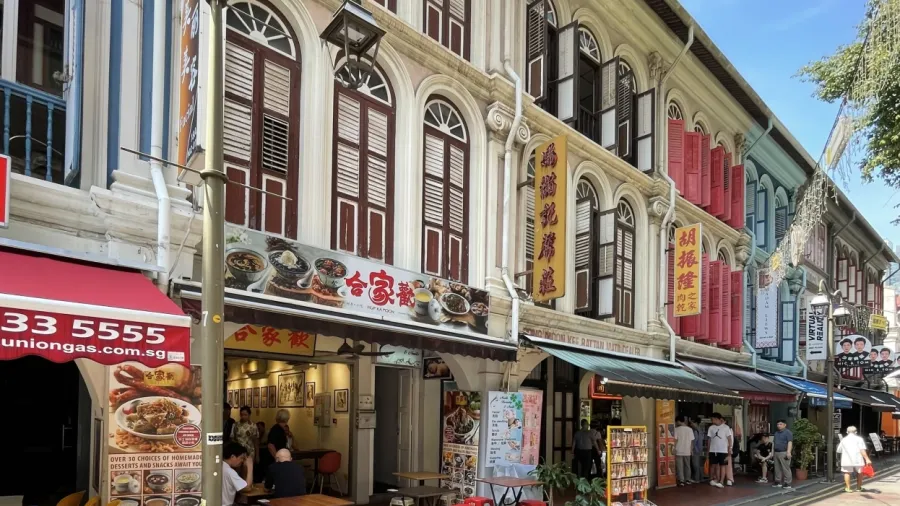
Stop 2: Walk the Chinatown shophouse streets: Pagoda Street, Trengganu Street, and the quieter back lanes off Smith Street. The colourful facades photograph well in morning light, and the crowds haven't arrived yet.
Stop 3: Stroll toward Gardens by the Bay. Skip the ticketed conservatories on a layover; they're beautiful but slow. Instead, walk the Supertree Grove from outside at ground level, where the scale hits differently. The Dragonfly Lake path behind it is almost always empty and genuinely calming.
Final Stop: Head back to Changi via Bayfront MRT (2 stops on the Circle Line to Paya Lebar, then East West Line to Changi). This gives you time for Jewel.
Not sure which stall to queue at, or which corner of Chinatown is worth your time? A local Lokafy guide will take you exactly where you should go. No tourist traps, no wasted time.
Route B: Neighbourhood walk (The Cultural Deep-Dive)
This option is ideal if you prefer a slower, cultural walk.
Start: Clear immigration, MRT to Bugis.

Stop 1: Kampong Gelam, Singapore's Arab Quarter, centred around the golden-domed Sultan Mosque on North Bridge Road. The streets around it, Arab Street, Bussorah Street, Muscat Street, are lined with textile traders and perfume shops that have been here for generations. It's one of the few parts of Singapore that still feels like it has a past.
Stop 2: Turn down Haji Lane, a single narrow street packed with independent boutiques, murals, and coffee shops. It opens late but looks good on camera early. Grab a flat white from one of the cafés along Beach Road if you need fuel.
Stop 3: Walk south to Bugis Street Market, more chaotic, more affordable, and a completely different texture from the calm of Kampong Gelam. Good for a browse if you have time, easy to skip if you don't.
Stop 4: Head up to Little India (one stop on the Downtown Line to Rochor, or a 15-minute walk). Serangoon Road and the lanes off it smell like jasmine and sandalwood. The Sri Veeramakaliamman Temple on Serangoon is free to enter and genuinely worth two minutes inside.
Final Stop: MRT back to Changi from Little India station (Downtown Line to Expo, then to Changi).
This route gives a more immersive look at daily life. It is especially good for repeat visitors who have already seen Marina Bay.
What to eat during your Singapore layover

Singapore's hawker culture is a UNESCO-recognised culinary tradition. It's also the best S$8 you'll spend anywhere in Asia.
- Chicken rice: Poached or roasted chicken over fragrant rice, served with chilli sauce and ginger paste. Simple, but the version at a good stall is unlike anything you'll find outside Singapore.
- Laksa: Coconut-based noodle soup with prawns and a hit of chilli. Rich and filling. Order a half-portion if you're also getting chicken rice.
- Char kway teow: Flat rice noodles stir-fried with egg, cockles, bean sprouts, and lap cheong (Chinese sausage). Smoky, slightly oily, and legitimately hard to stop eating.
- Kaya toast: Toasted bread with coconut jam and cold butter, served with soft-boiled eggs and a black coffee. Singapore's default breakfast, and one of the better ones in the world.
- Sugarcane juice: Fresh-pressed, sometimes with lemon. Ice cold. Non-negotiable in the heat.
"Fancy restaurants? Nah! Definitely a hawker centre! You will be spoiled with a choice of our local delicacy, and best of all, it's very affordable. Chicken rice, Laksa, Popiah, oh, and don't forget to get a glass of sugarcane with lemon to quench your thirst!"
— Josephine, Singapore local, born and raised in Singapore, Lokafyer
This insight reflects how locals actually eat. Hawker centres are fast, affordable, and perfect for an explore Singapore like a local experience. The best hawker stalls are rarely the ones on Google Maps.
Save time for Jewel Changi on your way back

One of the biggest mistakes travelers make is heading straight to their gate. Jewel Changi is a destination in itself. It is a massive retail and nature complex connected to Terminal 1 (and accessible via link bridges from T2 and T3).
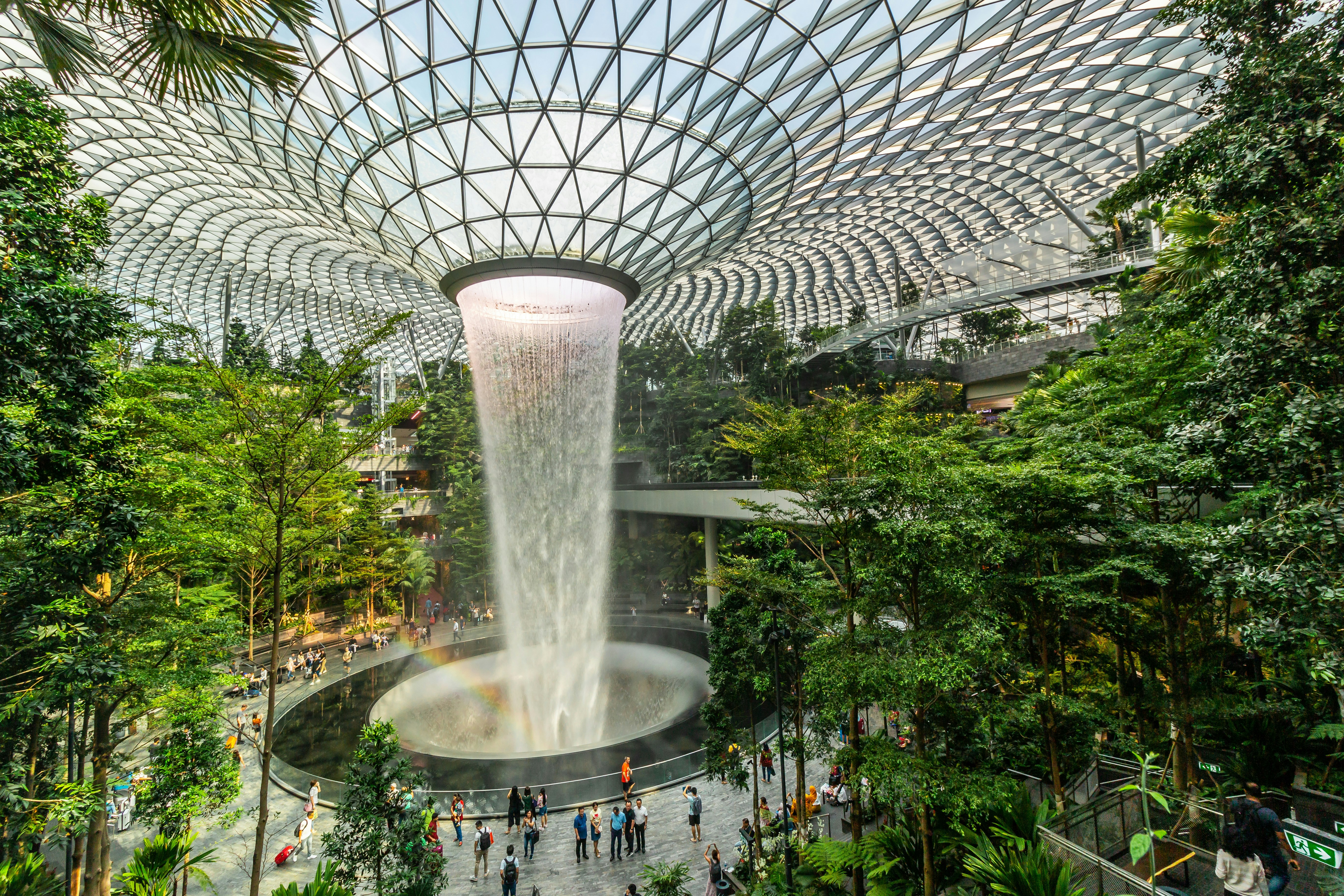
Jewel Changi is a five-storey garden and retail complex connected directly to the airport terminals. Inside it is the HSBC Rain Vortex, the world's tallest indoor waterfall, 40 metres of water falling through a gap in the glass canopy. It's free to look at from the ground floor.
Budget 45 minutes here before you head through departure gates. Get a coffee from one of the cafés on the lower levels, walk the indoor forest loop (called Shiseido Forest Valley), and get a photo of the waterfall. It's a completely surreal way to end a layover in a country that builds its airport like a destination.
Getting back to Changi on time
The hard rule: leave the city by hour 5.5. Singaporeans are punctual, and you should be too. To avoid any stress, aim to be back at the airport 2 hours before your flight (or 1.5 hours if you have already checked in online and have no bags).
Changi's immigration and security are fast compared to most airports, but don't test it. Here's how the final stretch looks:
- Hour 0: Land and clear immigration.
- Hour 1: Arrive in the city (MRT or Grab).
- Hours 1 to 5.5: Eat, walk, and explore.
- Hour 5.5: Start heading back to Changi.
- Hour 6.5: Arrive at Changi, explore Jewel.
- Hours 7.25 to 8: Head to your gate.
If your layover starts between 10 PM and 6 AM, the hawker centres will be closed or winding down. Adjust to night spots like Lau Pa Sat (open late) or stay within Jewel and Changi's own Terminal 3 food hall, which is genuinely worth exploring on its own.
Frequently Asked Questions
Can I leave Changi Airport on an 8-hour layover? Yes. Eight hours is more than enough to leave, spend time in the city, and return comfortably. Budget 30 minutes for immigration on arrival, 30 minutes on the MRT each way, and you have roughly 5 hours in Singapore.
Do Indian passport holders need a visa for a Singapore layover? Not if you hold a valid visa from the US, UK, Australia, Canada, or Germany. Singapore's Visa-Free Transit Facility (VFTF) covers Indian nationals transiting through Changi with these visas. Always verify with the ICA Singapore website before travelling.
What is the fastest way to get from Changi Airport to the city centre? The MRT East West Line. It takes 30 minutes, costs approximately S$2.20, and runs direct from any terminal. No traffic, no negotiating fares.
Can I store my luggage at Changi? Yes. Every terminal at Changi has "Baggage Storage" counters available 24/7. It is much easier to explore the city without dragging a carry-on behind you.
Is it safe to explore Singapore during a layover? Singapore is one of the safest cities in the world. Public transport is easy and English is widely spoken.
What should I eat during a Singapore layover? Prioritise a hawker centre over any restaurant. Chicken rice, laksa, and kaya toast are the three non-negotiables. Maxwell Food Centre (Chinatown) and Lau Pa Sat (CBD, open late) are the most accessible from the city-side MRT stops.
How do I book a local guide for a Singapore layover? Through Lokafy. You pick the duration, the guide meets you at or near Changi, and takes you through the city on a schedule built around your flight. No fixed tourist route.

Experience SIngapore like a Local
Eight hours in Singapore is the rare layover that feels like a mini trip. You can eat well, walk through a real neighbourhood, and still enjoy the airport’s best attraction before departure.
8 hours in Singapore with a local is better than 3 days on your own.
Enjoyed this article?


